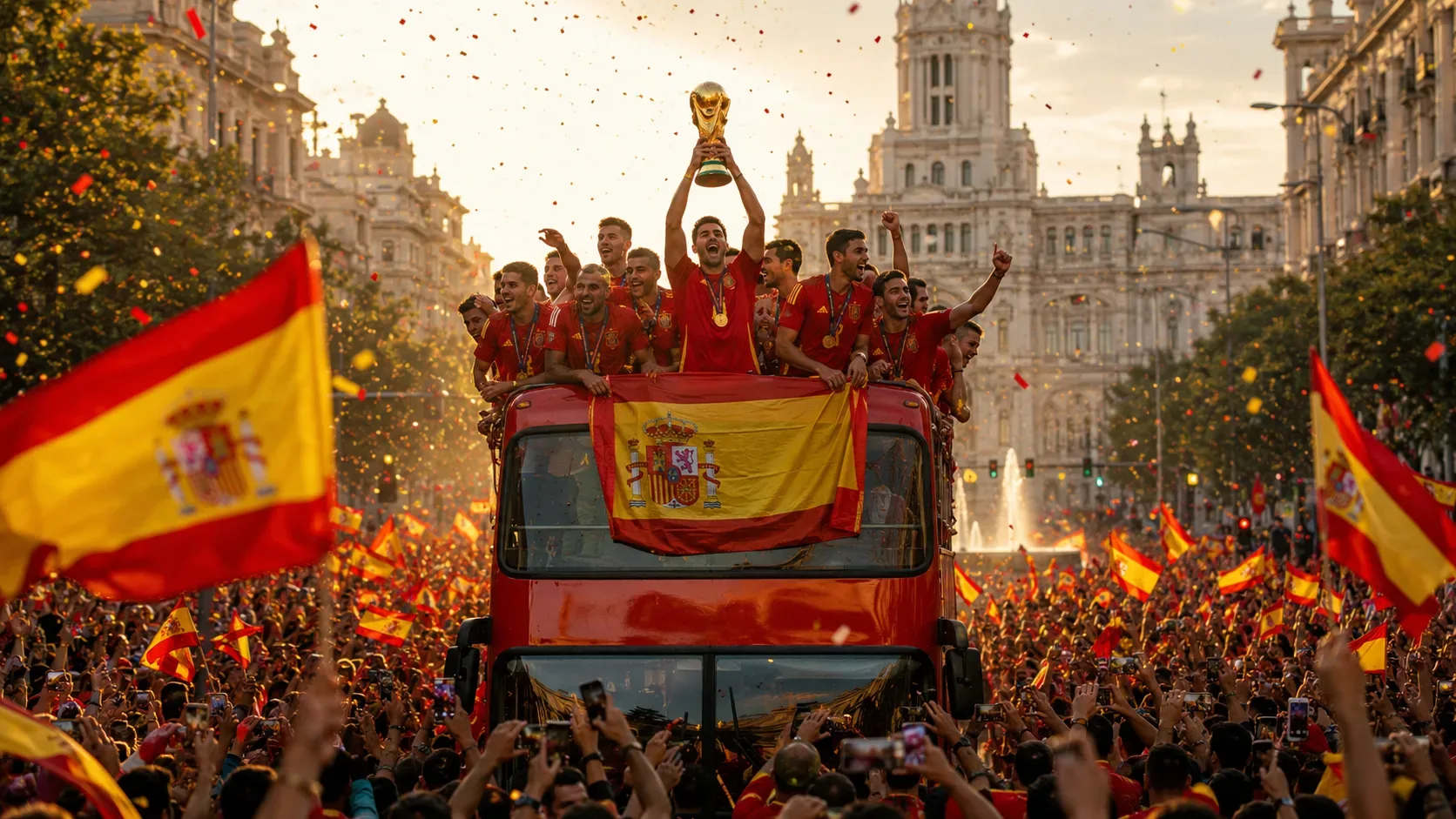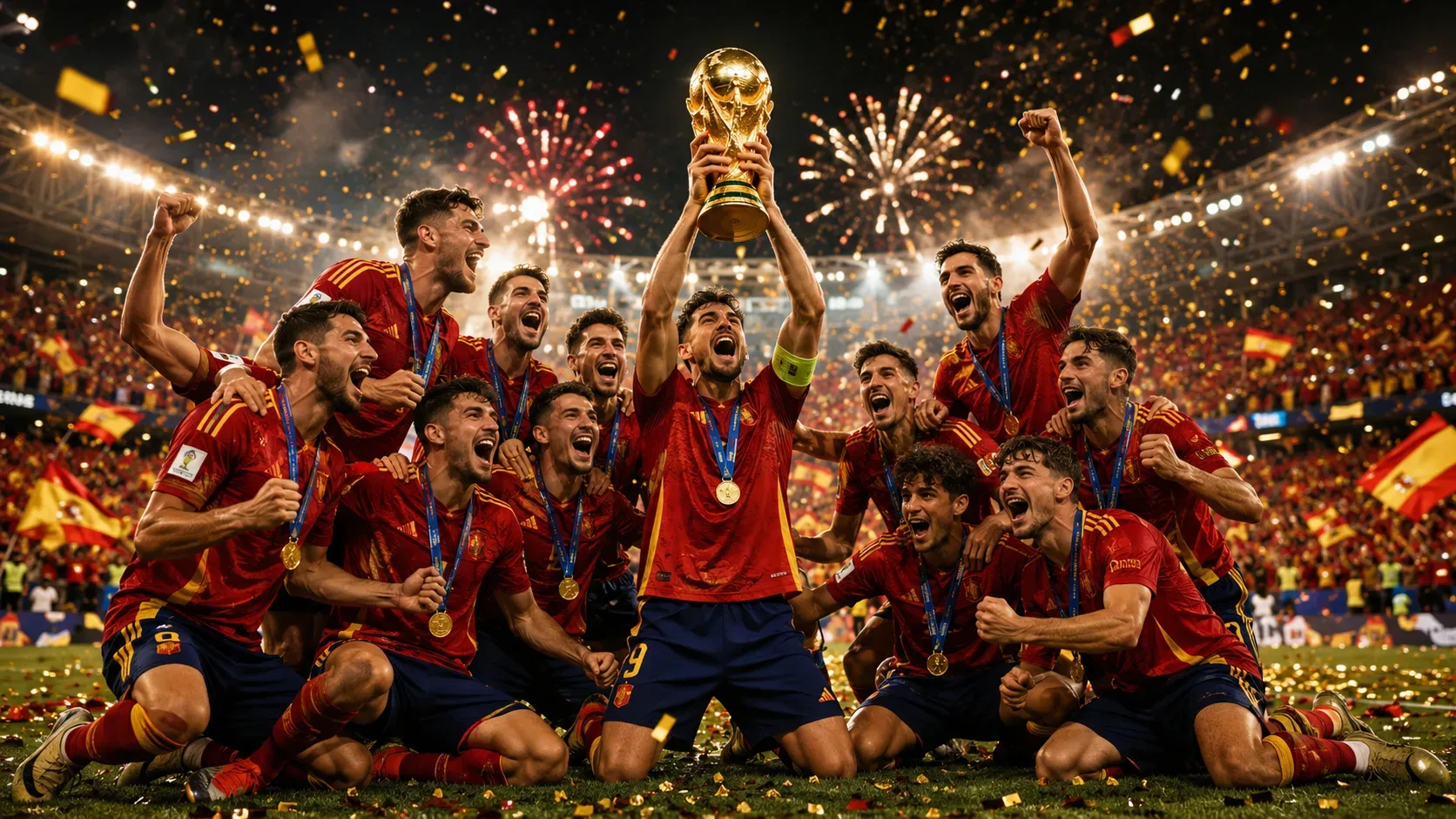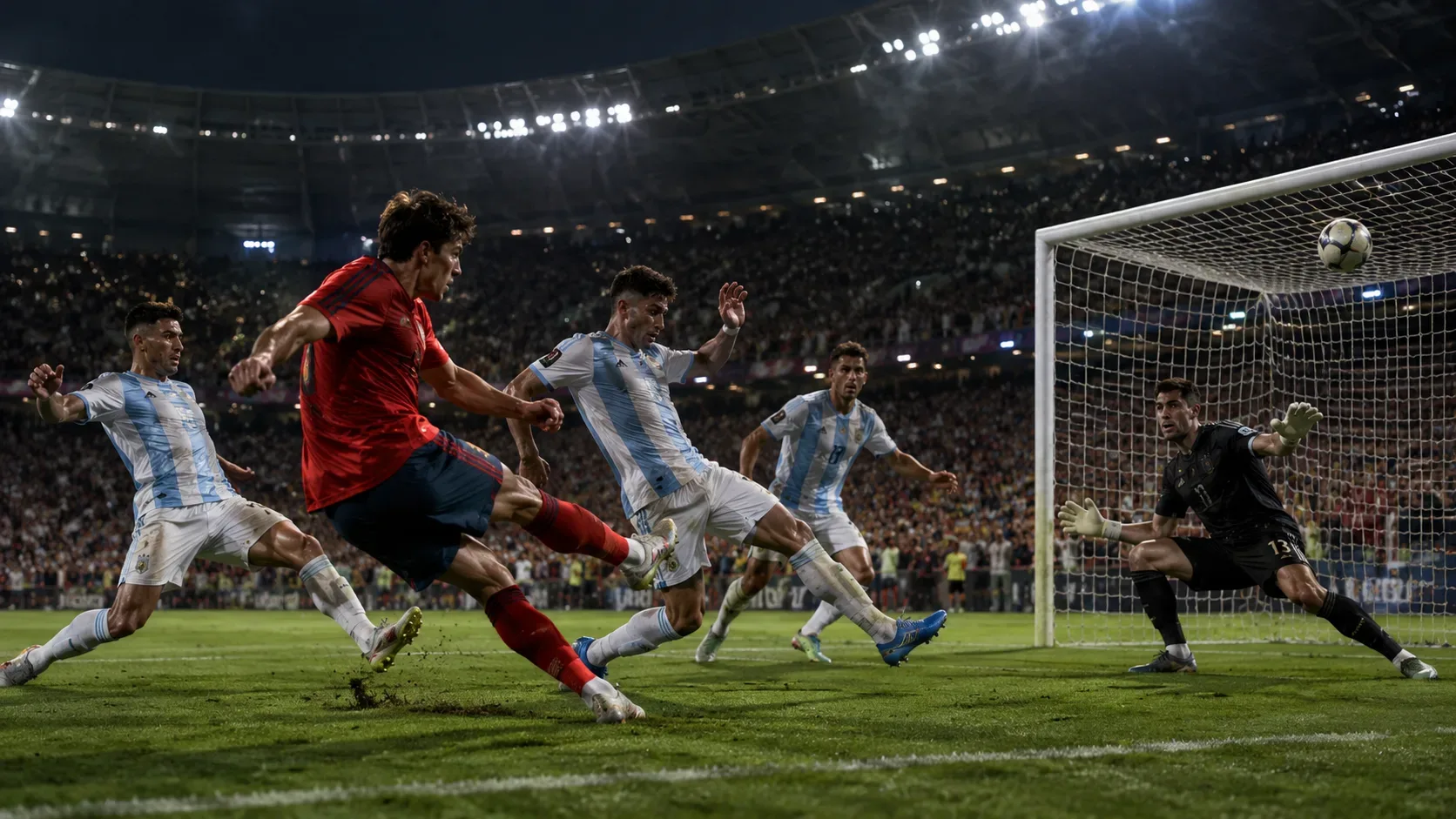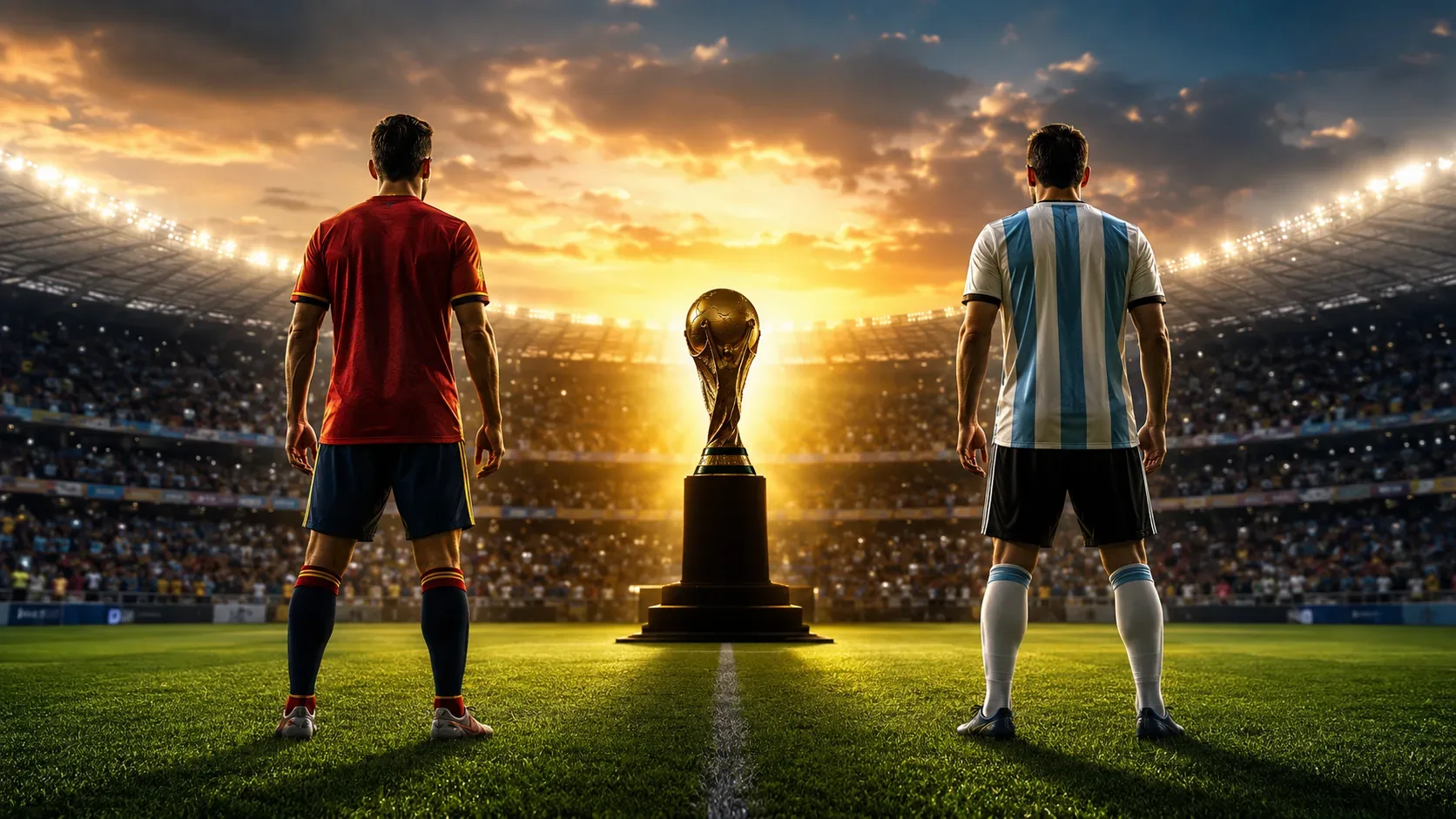
The last match of the 2026 World Cup will pit the most dominant team in the tournament against each other and the team that has most demonstrated its ability to survive moments of pressure. Spain and Argentina will compete for the title this Sunday, July 19, at 4pm Brasília, at the New York/New Jersey Stadium, in East Rutherford.
Spain arrives supported by a sequence of 37 matches without losing, only one goal conceded during this World Cup and not a minute behind on the scoreboard. Argentina, on the other hand, won their seven games and achieved three consecutive comebacks in the knockout stage, showing an emotional resilience that became one of the main hallmarks of Lionel Scaloni's team.
It's a final between control and survival. Between Spanish ball circulation and Argentine competitive aggressiveness. Between the strength of an extremely organized collective system and Lionel Messi's ability to transform a single space into a decisive opportunity.
Spain x Argentina: final information
The match concludes the first men's World Cup contested by 48 teams and will be the 104th game of the competition. Spain is looking for its second world title, after winning in 2010. Argentina is trying to reach its fourth title and become the first team to win two consecutive World Cups since Brazil in 1958 and 1962.
| Information | Detail |
| Match | Spain x Argentina |
| Competition | World Cup 2026 |
| Phase | Final |
| Date | Sunday, July 19 2026 |
| Time | 16h Brasilia |
| Location | New York/New York Stadium Jersey |
| City | East Rutherford, New Jersey |
| Referee | Slavko Vinčić, from Slovenia |
| Broadcast in Brazil | TV Globo, sportv, ge TV, SBT and CazéTV |
The refereeing team will have Slavko Vinčić as the main referee, with Slovenians Tomaž Klančnik and Andraž Kovačič as assistants. Bastian Dankert, from Germany, will command VAR.
What's at stake for Spain and Argentina
For Spain, the cup would represent confirmation of a new era of dominance. The team had already won the European Championship and reached the World Cup with a consolidated model, based on rational use of space, technical quality in midfield and collective pressure after losing the ball.
Luis de la Fuente's team does not depend exclusively on one star. Rodri controls the pace, Dani Olmo finds spaces between the lines, Fabián Ruiz helps speed up the circulation and Lamine Yamal loses balance through the corridors. Full-backs, midfielders and forwards participate in the offensive build-up, making it difficult to identify a single player who can be neutralized to disrupt the system.
Argentina enters the field defending the title won in 2022 and trying to prolong one of the most successful phases in its history. The group was champion of the Copa América in 2021 and 2024, in addition to the World Cup in Qatar, and a large part of the squad knows the weight of a decision of this magnitude.
There is also the emotional component of Lionel Messi. The number 10 has already indicated that this will be his last participation for the team in a World Cup. At 39 years old, he acts less like a striker stuck on the last line and more like an organizer, accelerating the game when he identifies spaces and carefully choosing the moments to reach the area.
The contrast that can define the final
Spain prefers to control the game before attacking. His possession is not just used to accumulate passes, but to move the opponent until he finds an unprotected zone.
In the semi-final against France, the Spanish team won 2-0 and did not allow a French shot on target until after the 80th minute. The performance reinforced the impression that pushing for a Spanish exit seems simpler in theory than in practice.
The problem for Argentina is that disorganized pressure can favor precisely what it intends to prevent. When the opponent advances many players, Unai Simón, the defenders and Rodri have enough quality to overcome the first line and find an open field.
For this reason, Scaloni will probably avoid constant persecution. The tendency is for Argentina to choose specific moments to press, close the central spaces and try to induce Spain to play close to the flanks.
Spain, in turn, will need to be careful with losing the ball. Argentina can attack vertically with Julián Álvarez, De Paul, Enzo Fernández and Mac Allister, in addition to Messi finding passes before the opposing defense can reorganize itself.
The most important individual duels
Rodri against Messi's movement
Messi will hardly remain in a single position. He should drop back to receive between the Spanish midfielders and get closer to Enzo Fernández and Mac Allister.
Rodri will have to decide when to accompany him and when to protect the entrance to the area. If he advances too far, he could open up space for Julián Álvarez. If he retreats excessively, Messi will have freedom to think and distribute the game.
Lamine Yamal against Tagliafico
Spain's main source of imbalance must be on the right. Lamine Yamal can attack from the outside, drive to the center or combine with Pedro Porro and Dani Olmo.
Tagliafico will likely receive help from Mac Allister or Paredes. This coverage will be necessary, but it could force Argentina to move many players to the sector and leave spaces in other regions.
Paul against the Spanish rhythm
Rodrigo De Paul's likely return to the starting lineup does not just represent a change of names. The midfielder offers intensity, ability to press and an important connection with Messi.
Your mission could be to make it difficult for Rodri to leave and prevent Spain from determining the speed of the match. The risk is to exceed the limit of aggressiveness and offer dangerous fouls or cards.
Cubarsí against Messi and Julián Álvarez
Pau Cubarsí played an important role in controlling the French attack in the semifinal. Against Argentina, they will face a different difficulty.
Julián Álvarez attacks from deep, while Messi drops back to create. The young Spanish defender will need to choose between keeping up with the attacker and maintaining the structure of the defensive line.
Probable lineups for Spain and Argentina
The lineups are still considered probable and may change until official release.
Spain's probable lineup
Unai Simón; Pedro Porro, Aymeric Laporte, Pau Cubarsí and Marc Cucurella; Rodri, Fabián Ruiz and Dani Olmo; Lamine Yamal, Álex Baena and Mikel Oyarzabal.
The expectation is to maintain the formation used in the quarter-finals and semi-finals. Fabián Ruiz should remain in the position previously occupied by Pedri.
Probable Argentina lineup
Emiliano Martínez; Molina, Cristian Romero, Lisandro Martínez and Tagliafico; Paredes, De Paul, Enzo Fernández and Mac Allister; Lionel Messi and Julián Álvarez.
Scaloni varied the system more during the competition. For the decision, the tendency is for De Paul to return, offering greater combativeness to the midfield. Lautaro Martínez appears as one of the main alternatives to modify the attack during the game.
The physical doubts that moved the week
Lamine Yamal and Pedro Porro worked separately on part of the Spanish preparation. Yamal had received a knock against France, while Porro had a muscle problem considered mild.
The Spanish Federation reported that the separate work was preventive and that both were expected for the final. The projections released on the day of the match continue to place the two among the starters.
Preparation was also affected by weather conditions. Storms in the New York and New Jersey region caused the cancellation of Spain's last training session on the field and delayed Argentine activity by approximately 45 minutes.
For the time of departure, the forecast is for predominantly sunny weather, with a temperature close to 27 °C. Smoke from Canadian forest fires raised concern during the week, but the impact is expected to be reduced in the final.
The controversies surrounding the decision
Complaints about arbitration and the “VARgentina” label
The Argentine campaign was accompanied by complaints about refereeing decisions and the new VAR intervention protocol. Fans and part of the press started using the term “VARgentina”, especially after contested moves against Egypt and Switzerland.
The criticisms do not prove favoritism, but they do show that any controversial decision in the final will have widespread repercussions. The discussion about VAR itself became part of the match atmosphere.
Spanish defender Aymeric Laporte also increased tension by criticizing contacts and provocations that, in his opinion, were not properly punished in Argentina's previous games. The topic gained strength after the confusion at the start of the semi-final against England.
For Spain, getting into an emotional contest could be exactly what Argentina want. Keeping the ball moving and avoiding unnecessary clashes will be as important as any tactical adjustment.
The track over the Falkland Islands
Another controversy arose after Argentina's victory over England. Team players posed with a banner containing a message about the Falkland Islands, a territory administered by the United Kingdom and claimed by Argentina.
The British government requested that FIFA investigate the demonstration for possible violation of rules that restrict political messages in competitions. The case still surrounded the Argentine delegation during the preparation for the final.
The first big half-time show of a final
The decision will also feature the first halftime show in the history of the World Cup finals. Madonna, Shakira, Justin Bieber and BTS were announced as headliners, turning the match into a sporting and musical event on a similar scale to the North American grand finals.
The novelty increased commercial interest, but also sparked discussions about transforming the final into a longer spectacle and about possible effects of the extended break on the players' physical preparation.
Messi against Lamine Yamal: two generations on the same stage
The image of Lionel Messi next to Lamine Yamal as a baby became one of the symbols of the final. Almost two decades later, the two will be on opposite sides in the biggest game in world football.
Direct comparison, however, oversimplifies the comparison. Messi is Argentina's technical and emotional center, while Yamal operates within a Spanish structure that distributes responsibilities across the field.
The Argentine may need just one play to decide. The Spanish tend to participate in a continuous process of movement, pressure and creation.
It's not just a duel between an established idol and a young talent. It's the dispute between two different ways of producing influence in a match.
What each team needs to do to be champion
Camino de España
Spain will increase their chances if they succeed:
- Circulate the ball without accelerating hastily.
- Forcing Messi to defend away from the Spanish area.
- Attack the space between Tagliafico and the Argentine midfield.
- Avoid losing the ball through the center.
- Maintain calm in the face of contact and provocation.
- Prevent Argentina from taking the match into a sequence of physical disputes.
Argentina Path
Argentina will need:
- Close the passing lines for Rodri.
- Select pressure moments.
- Attack quickly after recoveries.
- Bring Enzo Fernández, Mac Allister and Messi closer.
- Explore set pieces and second balls.
- Preserve energy for a possible extension.
- Prevent Lamine Yamal from receiving repeatedly in individual situations.
Prediction for Spain x Argentina
Spain has the most stable and consistent football. They only conceded one goal, were not behind on the scoreboard and showed the ability to control technically strong opponents. Its model offers collective responses even when a player is neutralized.
Argentina has less control, but has demonstrated greater experience in chaotic games. Scaloni's team knows how to compete in different scenarios, has reserves capable of changing the match and has players accustomed to finals.
The tendency is for a balanced decision, with Spain having more possession and Argentina producing its best attacks in transitions. The first goal could completely change the match: if it is Spanish, Argentina will need to abandon some caution; If it is Argentine, Spain will face for the first time in this World Cup the obligation to look for a comeback.
Editorial prediction: 1-1 draw in regular time, with Spain slightly favored to lift the cup after extra time or penalties.
Game tendency: few spaces, high intensity in midfield and tight scoreboard.
Prognosis confidence: moderate.
This prediction represents a sports analysis, not a guarantee of the result. An expulsion, an individual error, a dead ball or a play by Messi or Lamine Yamal can completely change the scenario.
A final that could mark the end and beginning of two eras
Spain enters the decision trying to transform technical superiority into a historic achievement. Argentina seeks to prove that experience, competitiveness and ability to react continue to be enough to overcome a more organized opponent.
For Messi, the match could represent the last opportunity to lift a trophy with the national team. For Lamine Yamal and the new Spanish generation, it could be the beginning of a cycle capable of dominating international football.
Spain arrives as slight favorites for everything they have produced throughout the competition. Argentina, however, has already shown that it does not need to control every minute to win. You just need to survive long enough to find the right moment.
It is this difference that makes the final unpredictable: Spain tries to build victory throughout the match; Argentina believes it can conquer it in a single instant.
Sources of investigation
The match information, possible lineups and broadcasts were verified in FIFA and ge publications. The analysis of the campaign, tactical issues and events of the week considered reports from Reuters and the Associated Press, as well as the updated weather forecast for East Rutherford.