The 2026 World Cup final needed 120 minutes to find its champion. After dominating much of the match, creating the best opportunities and repeatedly running into Emiliano Martínez, Spain finally found the goal at the beginning of the second half of extra time.
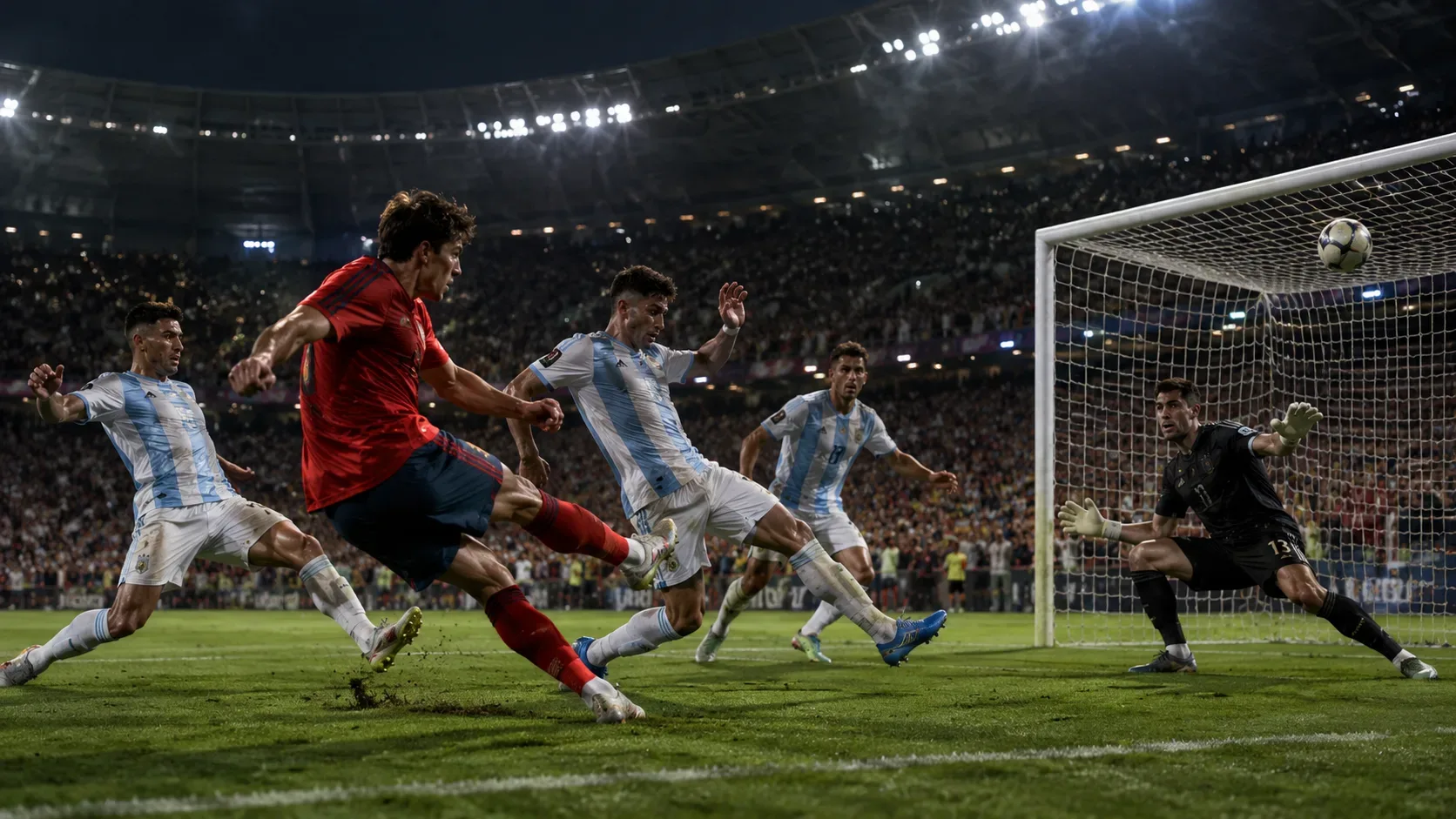
Ferran Torres scored in the 106th minute and secured Spain's 1-0 victory over Argentina. The goal ended the defending champions' resistance, avoided a penalty shootout and gave Spain the second world title in its history.
Ferran Torres scores in the first attack of the second half of extra time
Spain returned for the last 15 minutes with the same willingness to put pressure on the Argentine defense. It took just 37 seconds for this insistence to turn into the title-winning goal.
Pedro Porro received space on the right side and lifted the ball into the area. Nico Williams appeared on the opposite side and, instead of trying to finish, headed towards the center. Ferran Torres came in free and hit the first time with his left foot, sending the ball into the roof of Emiliano Martínez's net.
It was a construction that summed up Spanish dominance: width, intelligent occupation of the area and the presence of several players in attack. Argentina, who already played with ten men after Enzo Fernández was sent off in the 93rd minute, were unable to keep up with Ferran's movement.
The Spanish striker had come on during the second half of regulation and began offering depth against an increasingly tired defense. In the decisive move, he took advantage of the space left between the Argentine defenders.
Who dominated the second half of extra time?
Spain dominated most of the period, especially after opening the scoring. Luis de la Fuente's team controlled possession, explored the sides of the field and tried to take advantage of the numerical advantage to prevent Argentina from organizing continuous pressure.
The superiority already appeared clearly in the numbers. At 110 minutes, the Spanish had accumulated 20 shots, 12 of which went towards the goal. Argentina had still not managed to complete an offensive play throughout the match.
The scenario changed only in the final minutes. With no other alternative, Lionel Scaloni's team advanced its players and started to throw balls into the area. Spain stopped pressing so high and focused their efforts on protecting their advantage.
Thus, the dominance of the period had two well-defined phases:
- Spain controlled the beginning, scored and continued to create spaces.
- Argentina took more risks in the final minutes, but attacked in a direct and unorganized manner.
- The Spanish defense resisted the few truly dangerous opportunities.
- Attrition and numerical inferiority limited the Argentine reaction.
Opportunities created and wasted
Ferran Torres' goal did not immediately end Spain's chances. With Argentina forced to leave, new spaces appeared for counterattacks.
In the 114th minute, Ferran once again escaped the defense, advanced from midfield and hit Emiliano Martínez on the way out.. The attacker came to celebrate, but semi-automatic technology confirmed an offside position by a small margin.
Shortly afterwards, Nico Williams made a good individual play on the left, entered the area and could have served Ferran with a simple pass. The winger tried to make an assist, made a mistake and sent the ball straight out. It was the main opportunity wasted by Spain to definitively kill the decision.
Argentina's reaction in the final minutes
Argentina took until the 117th minute to register their first goal attempt. Messi took advantage of a live ball on the edge of the area and finished strongly, but the shot hit Mikel Merino. The move momentarily interrupted the match so that the Spaniard could be evaluated.
The greatest Argentine pressure came after 120 minutes. In a short free kick involving Messi, Giuliano Simeone reached the bottom and crossed low. Pau Cubarsí appeared in front of the goal and deflected the ball out, preventing it from reaching the Argentine attackers.
At 120 minutes and two seconds into stoppage time, a corner from Messi was partially cleared by the defense. Simeone had the surplus inside the area, but finished off-balance and sent it over the top. It was Argentina's clearest chance to take the decision to penalties.
The best players from the second half of extra time
Ferran Torres
Ferran Torres was the decisive name. In addition to scoring the title-winning goal, he repeatedly attacked the Argentine defense and had another goal disallowed for offside. His entry gave Spain a more aggressive presence inside the box.
Nico Williams
Nico Williams was directly involved in the goal by heading Pedro Porro's cross. He also continued to offer speed on the left, although he wasted a great opportunity when trying a pass in the 116th minute.
Pedro Porro
The right-back was fundamental in the play that decided the World Cup. His deep cross found Nico Williams on the opposite side and completely opened up the Argentine defense. Pedro Porro still maintained intensity to support the attack even after more than 105 minutes of play.
Pau Cubarsí
Cubarsí appeared at the most important moment defensively. In the 120th minute, he cut off Simeone's low cross that could have resulted in an Argentine equalizer. His intervention had practically the same weight as a successful shot.
Emiliano Martínez
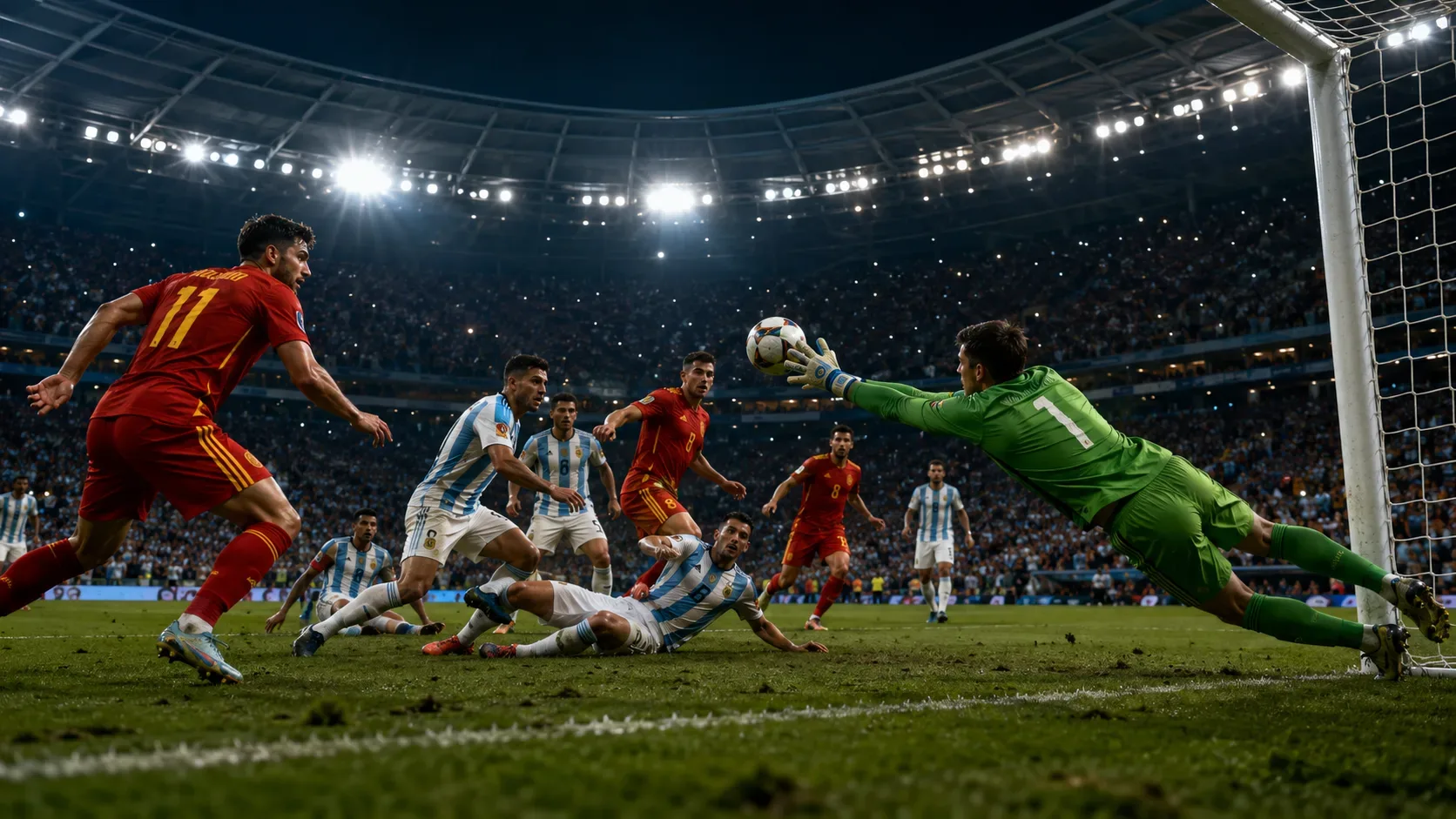
Even defeated, Emiliano Martínez was once again one of the great Argentine names. The goalkeeper made important saves during the match and maintained the draw while Spain piled up shots. Without his performance, the decision would probably have been resolved before extra time.
Why did Spain win the final?
The Spanish victory did not happen just because of the Argentine expulsion. The numerical advantage increased Spain's control, but the superiority was already evident from regulation time.
The Spanish team won because it maintained its identity even in the face of resistance from Emiliano Martínez. Instead of just resorting to crosses or hasty finishes, he continued moving the ball until he found spaces on the sides.
The substitutions were also decisive. Nico Williams and Ferran Torres came out with energy to face a worn-out defense. The two were directly involved in the goal, while Mikel Merino helped control the midfield during extra time.
Argentina, on the other hand, had enormous difficulty connecting Messi to the most advanced players. The expulsion of Enzo Fernández made the mission even more complicated and forced Scaloni to set up a structure aimed mainly at surviving until penalties.
The strategy almost worked. However, Spain continued to attack and were rewarded before Emiliano Martínez could decide a penalty shootout again.
Argentina reacted too late
The Argentine team showed resistance, but spent too much time just defending themselves. During almost the entire final, Messi received the ball far from the box and surrounded by Spanish players.
Only after Ferran Torres' goal did Argentina completely abandon its defensive posture. The team started to accelerate free kicks, throw balls into the area and use Simeone to attack the space behind the full-backs.
The reaction produced two important opportunities in stoppage time, but it came too late. The lack of shots during the first 117 minutes shows how Spain managed to neutralize the Argentine attack and keep Messi away from the most dangerous areas.
Spain wins its second world title
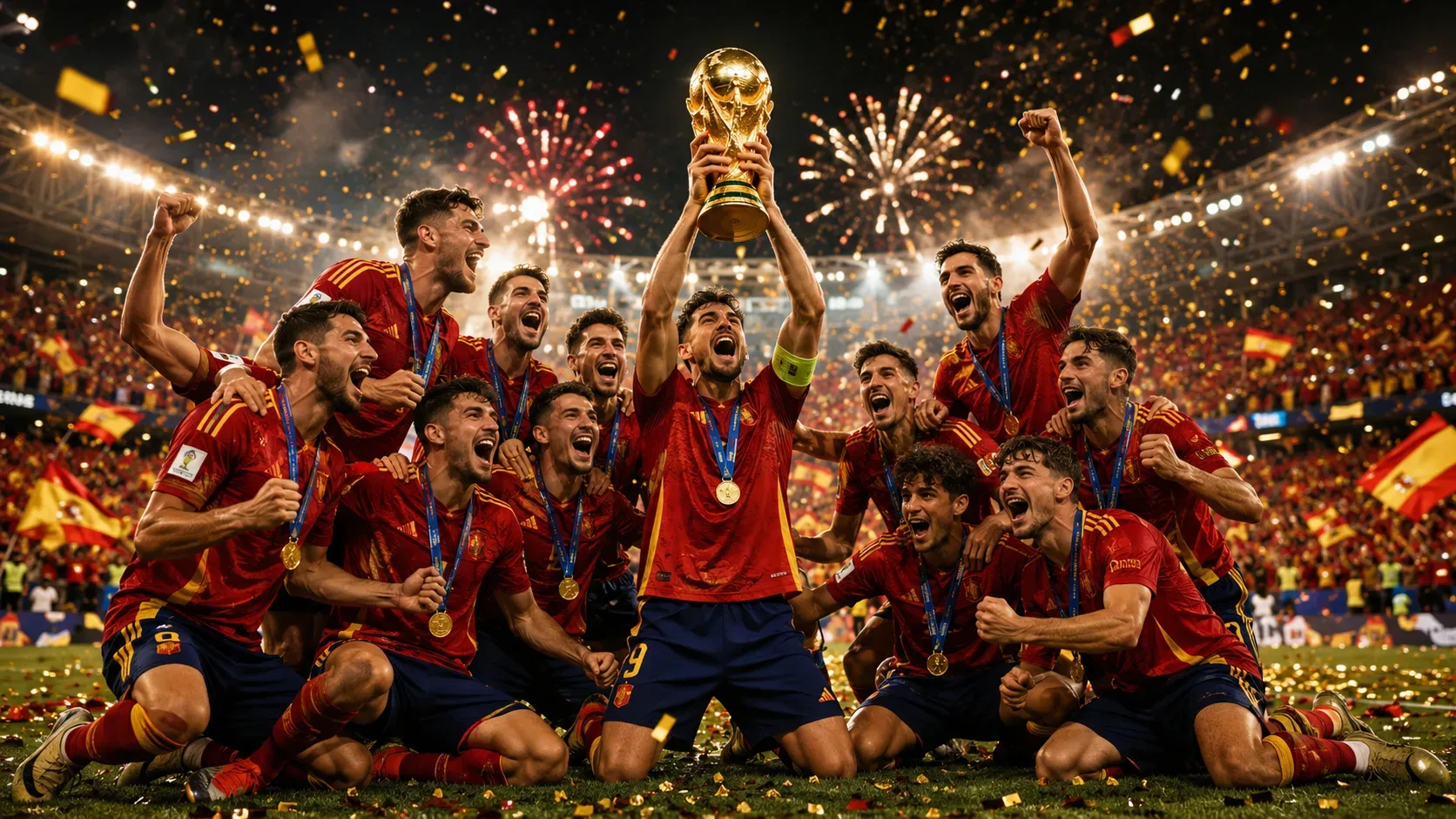
With the 1-0 victory, Spain won the 2026 World Cup and reached the second title in its history, repeating the feat achieved in 2010. Once again, the Spanish goal in a global final came in the second half of extra time.
Argentina ended its attempt to win two consecutive World Cups and finished the tournament as runners-up. Scaloni's team resisted throughout practically the entire decision, but offered very little offensively to justify a victory.
The minimum score may suggest balance, but the development of the match told a different story. Spain finished more, controlled the territory and forced Emiliano Martínez to work repeatedly. Argentina had merit for its resistance, but was unable to transform its experience into offensive opportunities.
The goal that turned Ferran Torres into a global hero
Ferran Torres started the final on the bench and ended up as the player who decided the World Cup. His performance shows how a substitution can completely change a balanced decision.
The striker entered to attack the spaces, maintained a constant presence in the area and appeared exactly where a center forward needed to be in the 106th minute. It wasn't just an important goal: it was the move that ended a highly tense match and confirmed Spanish dominance.
Spain left New Jersey with the trophy because they managed to combine control, patience and depth in the squad. Argentina came close to taking the decision to penalties, but the last opportunities from Messi and Simeone were not enough to prevent the Spanish consecration.