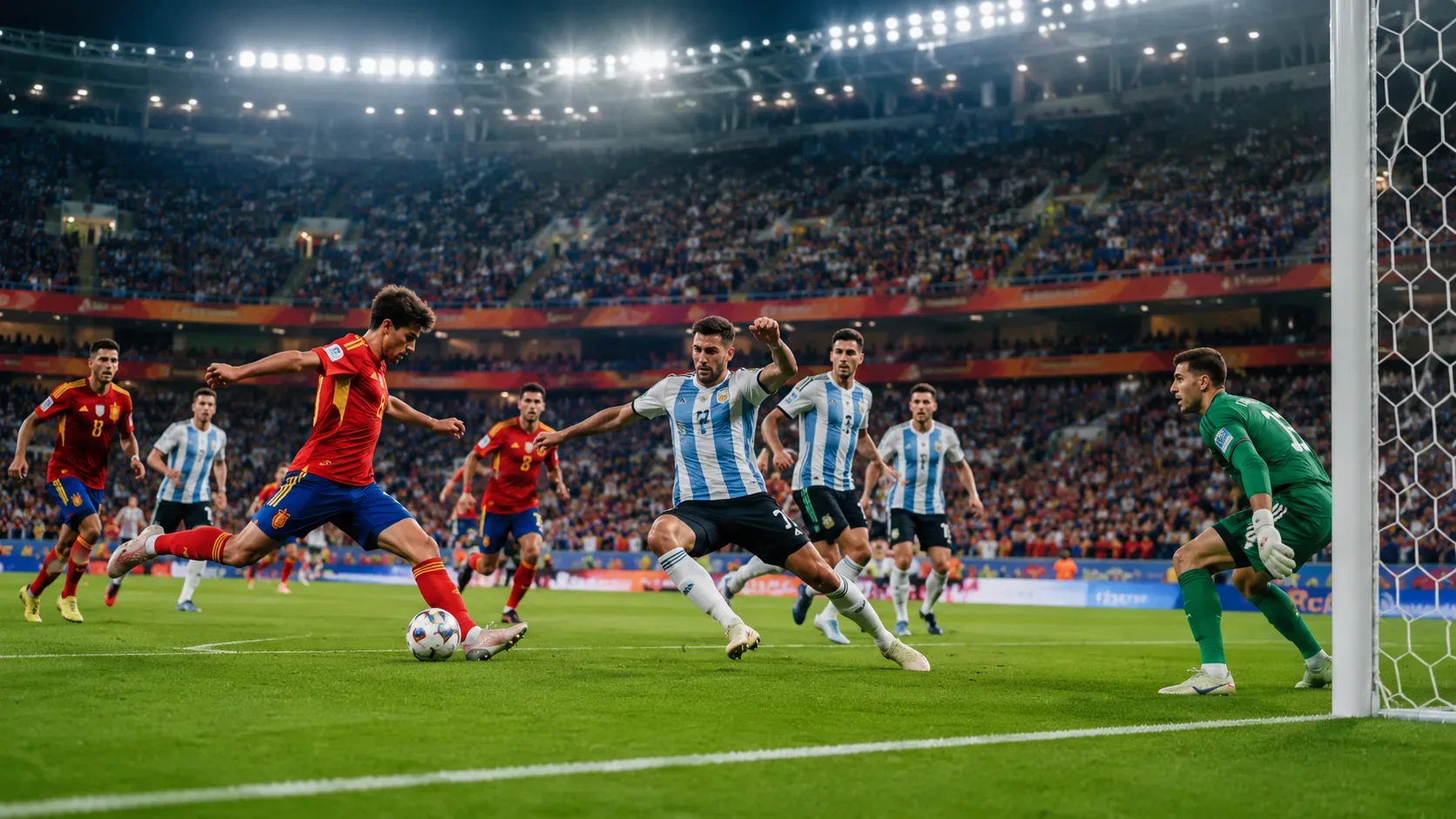
Spain were superior for most of the first half of the 2026 World Cup final, controlling possession, winning the ball back quickly and pushing Argentina into a more defensive stance. Spanish dominance, however, did not turn into an advantage on the scoreboard.
Argentina managed to survive the moments of greatest pressure, bet on physical disputes and tried to attack mainly with throws to Lionel Messi and Julián Álvarez. At the end of the initial stage, the score remained 0 to 0, despite the Spanish team having produced the clearest opportunities.
Spain dominated possession and territory
Luis de la Fuente's team took control from the opening minutes. Rodri retreated between the defenders to facilitate the ball, while Fabián Ruiz and Dani Olmo looked for spaces between the Argentine midfielders.
Spain had 68% possession in the first 15 minutes and maintained 63% when the first hydration break occurred. At 36 minutes, the Spanish had already made 233 passes, 209 of which were correct, compared to Argentina's 140 passes, of which 113 found a teammate.
This control was not just statistical. Spain played for long periods in the Argentine field, recovered several balls shortly after losing possession and made it difficult for Messi to participate.
Argentina tried to put pressure on Rodri with Julián Álvarez and Alexis Mac Allister, but had problems preventing the Spanish midfielder from organizing the game. When the Argentines used throws, Rodri also appeared to collect the second balls and keep Spain on the attack.
Lamine Yamal got his first big break
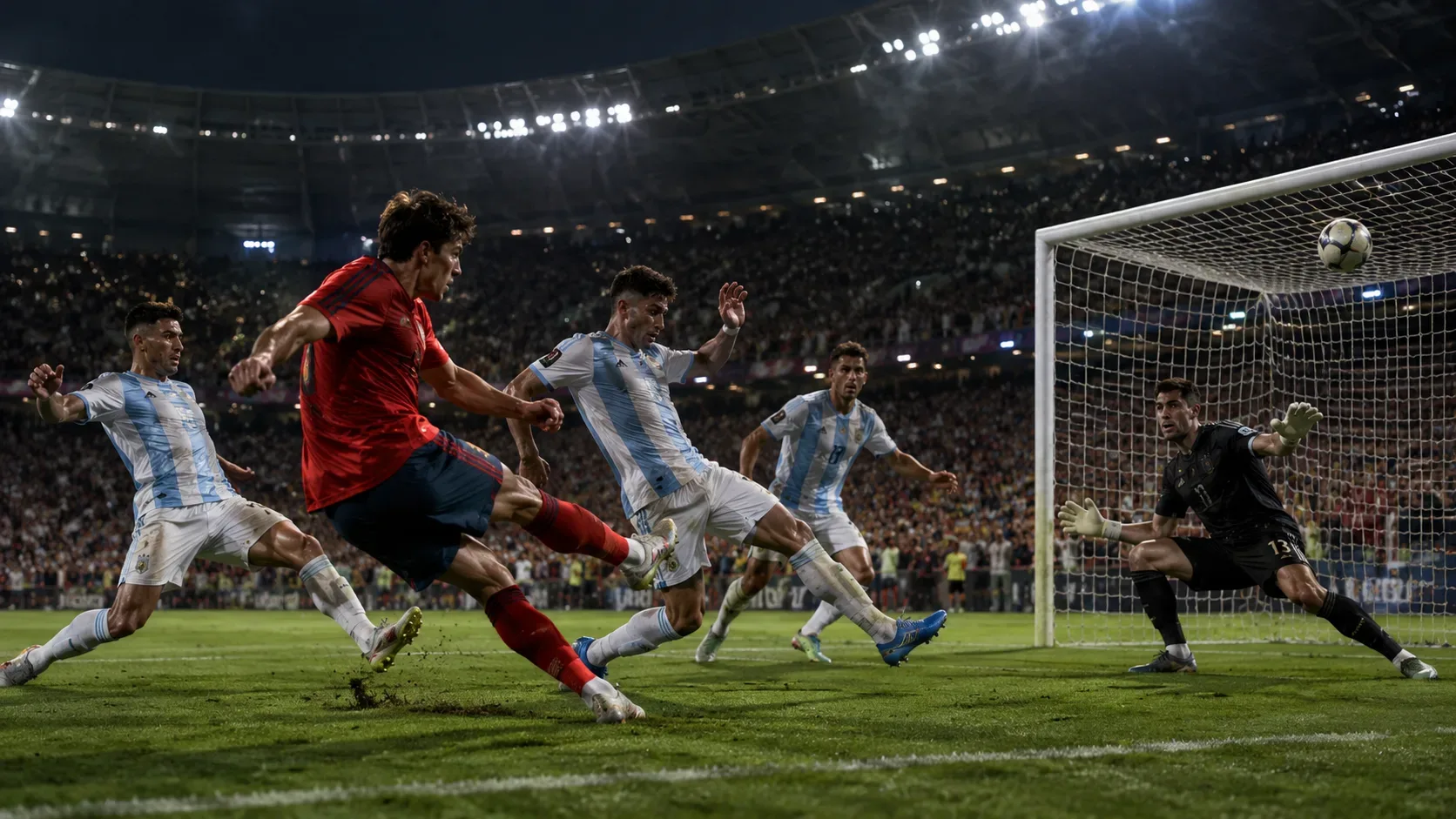
The best opportunity of the opening minutes came at five. Lamine Yamal played with Dani Olmo, entered the right side of the area and managed to finish, but the Argentine defense and Emiliano Martínez prevented the first goal of the decision.
Following the same move, Argentina responded with a ball thrown into the back of the Spanish defense. Messi tried to escape, but Unai Simón left the area and arrived before number 10.
Lamine remained Spain's main offensive path. The young man received the ball several times in the individual confrontation against Nicolás Tagliafico and, in the 17th minute, managed to escape to the right and cross low into the center of the area. No teammates showed up to complete it.
Argentina responded by increasing their physical intensity. Mac Allister made a strong tackle on Dani Olmo, while Tagliafico hit Lamine with the studs of his boot in the 29th minute. Neither of them received a card in these plays.
Argentina threatened more due to Spanish mistakes
Lionel Scaloni's team had difficulty building organized attacks. Messi participated little and registered just two touches of the ball during the first 20 minutes, his lowest mark in that initial period in a World Cup match as a starter.
Unable to put the captain constantly in the game, Argentina looked for direct shots to the backs of the Spanish full-backs. The strategy almost worked on two occasions.
First, Messi threatened to receive a free kick, but Unai Simón left the area to clear it. Then, in the 28th minute, Pau Cubarsí pushed the ball back with little force and allowed Julián Álvarez to compete for the play. Once again, the Spanish goalkeeper anticipated and avoided the danger.
These moves showed that Argentina didn't need to have much possession to threaten. All it took was a mistake in the Spanish exit or a space left by the full-backs for Messi and Julián to find free space.
Spain created the best chances at the end of the first half
After the hydration break, the pace remained controlled, but Spain found space again in the final minutes.
At 39, Alex Baena started a good build-up on the left side, Fabián Ruiz received it and activated the entrance to the area. Dani Olmo let the ball pass, allowing Mikel Oyarzabal to finish, but the shot went towards Emiliano Martínez.
Shortly afterwards, Lisandro Martínez interrupted a Spanish counterattack with a challenge on Oyarzabal and received the first yellow card of the match.
In the 43rd minute, Marc Cucurella advanced again, found space and hit low. The finish went wide of the Argentine goal. It was yet another demonstration of how the Spanish full-back managed to attack the space left by the Argentine positioning.
In stoppage time, Lisandro Martínez suffered a physical problem and had to leave the match, being replaced by the experienced Nicolás Otamendi. The forced change became an additional concern for Argentina ahead of the second stage.
Who dominated the first half?
Spain dominated the first half, mainly due to their ability to control possession, recover the ball quickly and keep Argentina away from Unai Simón's area.
This domain, however, was more territorial than absolute. The Spanish team had difficulty transforming ball circulation into really dangerous shots. Argentina defended with organization, made individual goals in several sectors and managed to lead the match until half-time without conceding a goal.
0 to 0 was more favorable to the Argentines. Even playing below their offensive capacity and with Messi having little participation, Scaloni's team remained completely alive in the decision.
Best players of the first half
Rodri
He was the main player in the first stage. Rodri controlled the pace, offered a safe exit, advanced with the ball and recovered several second balls before Argentina could start counterattacks.
Lamine Yamal
He created the first big chance of the final and was the main Spanish threat. His movement forced Tagliafico and Lisandro Martínez to provide constant coverage.
Marc Cucurella
He participated actively on the left side, helped with the pressure and appeared in the attack. He had a good opportunity in the 43rd minute, but shot wide.
Emiliano Martínez
The Argentine goalkeeper conveyed confidence. He intervened in Lamine's initial attempt and connected with Oyarzabal's finish, keeping Argentina in the game.
Julián Álvarez
Even though he received few balls in good conditions, he was important in the pressure. His effort almost led to the goal after Cubarsí's mistaken save.
Who owed money?
Lionel Messi had a very discreet first stage. Spain closed the spaces around the Argentine and prevented him from receiving the ball near the area. When he tried to retreat to participate in the construction, he found Rodri and the other Spanish midfielders well positioned.
Oyarzabal also appeared less than expected. The striker had a good opportunity in the 39th minute, but finished in the center of the goal. For Spain to turn its dominance into an advantage, it will need to offer more presence within the area.
What to expect from the second half?
Spain should maintain possession, but will need to speed up circulation and place more players in the area. In the first half, Lamine and Cucurella managed to cross a few times, but they almost always found Oyarzabal isolated between the Argentine defenders.
Luis de la Fuente could consider bringing in a player with a greater offensive presence or bringing Dani Olmo even closer to the striker. The risk is to advance the full-backs too much and offer the spaces that Messi and Julián tried to exploit.
Argentina, on the other hand, need to involve Messi more often. The captain can retreat to get the ball, move to the right side or be joined by another attacker. Lautaro Martínez appears as a natural alternative if Scaloni decides to increase his presence in the Spanish area.
Lisandro Martínez's departure could also have an impact. Otamendi offers experience and strength in the air, but Spain will be able to test their speed in duels against Lamine and Olmo.
Another important factor will be wear and tear. Spain spent much of the initial stage pressing and occupying the offensive field. If they lose intensity, Argentina may find more space for transitions — precisely the scenario in which Messi tends to be most dangerous.
The draw keeps the final completely open
Spain were better, had more possession and produced the clearest opportunities, but were unable to turn their dominance into a goal. Argentina withstood the pressure, protected Emiliano Martínez and reached half-time with the result they needed to reorganize their strategy.
The second half tends to be more open. The need to find the goal should force both teams to take more risks, expanding the spaces in midfield. After a first stage marked by caution and Spanish control, the decision could be defined by an error, a substitution or a single decisive participation by Messi or Lamine Yamal.