What is the so-called Bible Diet?
The expression “Bible Diet” does not refer to a single standardized diet. In practice, it represents a modern interpretation of eating habits found in different biblical passages, mainly in the Old Testament.
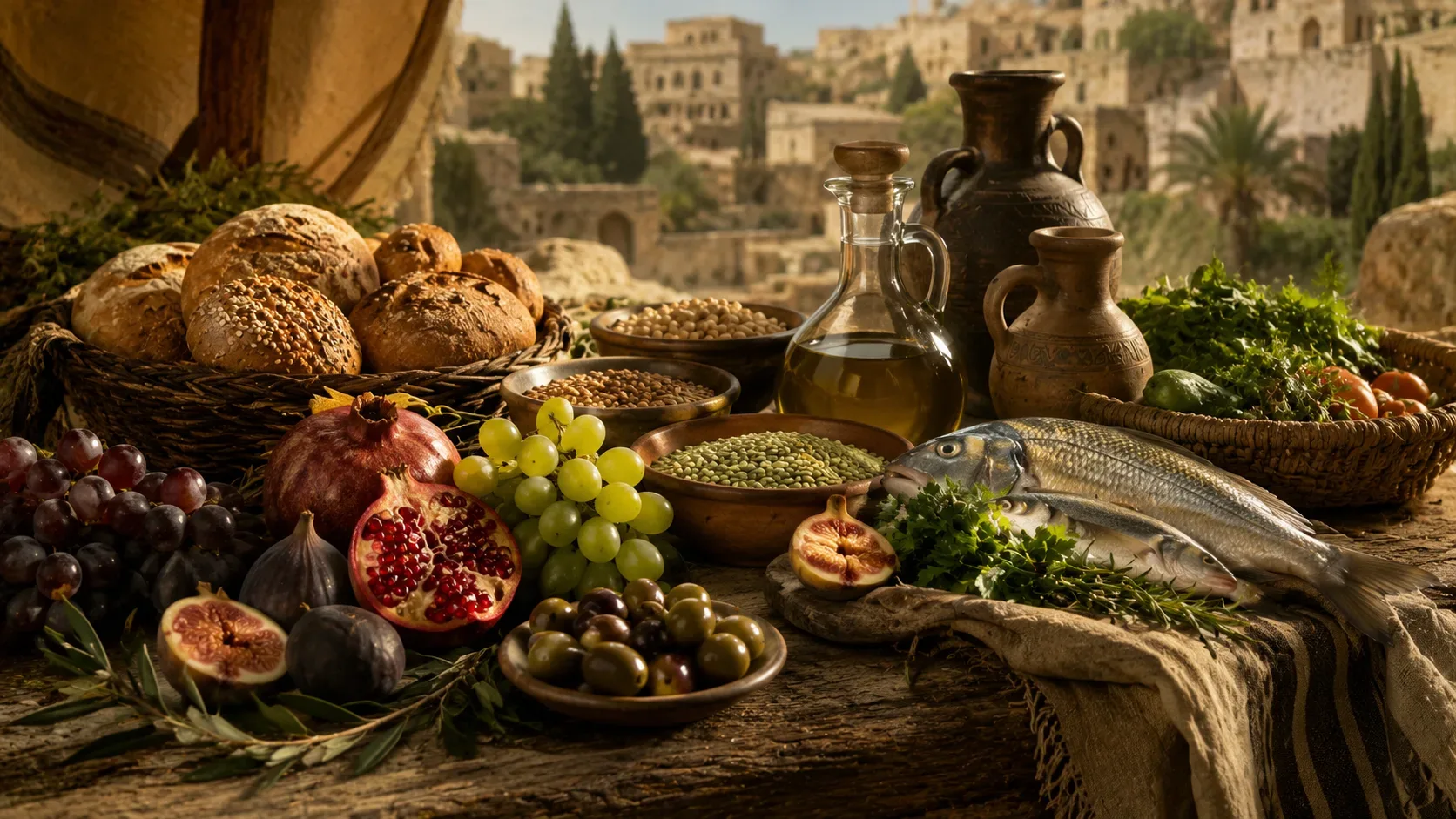
Among the foods often associated with this diet are:
- Fresh fruits;
- Vegetables;
- Whole grains;
- Legumes such as lentils and beans;
- Chestnuts and seeds;
- Mel;
- Olive oil;
- Pisces;
- Meats considered permitted by Jewish dietary laws.
One of the best-known examples is the Daniel Diet, based on the account in the book of Daniel, in which Daniel and his companions feed mainly on vegetables and water during a period of testing.
It is important to highlight that this report has a religious and spiritual context. Using it as a modern nutritional model requires an analysis based on science, not just the interpretation of the religious text.
Ancestral food: why does it attract so much attention?
The popularity of the Bible Diet is linked to a larger trend: interest in so-called ancestral foods.
The central idea is that human beings have spent thousands of years consuming minimally processed foods, while the modern food industry has introduced a large number of ultra-processed products rich in sugar, sodium, low-quality fats and additives.
Several nutrition studies show an association between excessive consumption of ultra-processed foods and a higher risk of obesity, type 2 diabetes, cardiovascular disease and other chronic conditions.
On the other hand, eating patterns rich in vegetables, fiber, good fats and natural foods are consistently associated with better health indicators.
What does science say about the foods present in the Bible?
Fruits and vegetables
These foods are important sources of vitamins, minerals, antioxidants and fiber.
A greater consumption of vegetables is related to a lower risk of several chronic diseases, especially cardiovascular problems.
Olive oil
Olive oil, mentioned several times in the Bible, is one of the pillars of the Mediterranean diet, considered one of the most studied dietary patterns in the world.
Rich in monounsaturated fats and antioxidant compounds, adequate consumption is associated with cardiovascular protection.
Grains and legumes
Beans, lentils, chickpeas and other protein-rich vegetables provide fiber, complex carbohydrates, vitamins and minerals.
These foods help control satiety, blood sugar levels and maintain intestinal health.
Pisces
Ancient people in the Mediterranean region consumed different types of fish.
Currently, science recognizes that many fish are important sources of high-quality protein and omega-3 fatty acids, nutrients linked to cardiovascular and brain health.
So does the Bible Diet work to lose weight?
It can contribute to weight loss, but not because there is something “magic” about biblical foods.
Weight loss occurs when there is an adequate energy balance, generally involving caloric consumption compatible with the body's needs.
A person who exchanges soft drinks, industrialized sweets and ultra-processed meals for quality fruits, vegetables, legumes and proteins will probably have an improvement in dietary quality and may lose weight.
However, it is possible to consume natural foods in excessive amounts and still gain weight.
The myths and exaggerations about the Bible Diet
“Biblical foods cure any disease”
This has no scientific proof.
A healthy diet reduces risks and contributes to the proper functioning of the body, but does not replace medical treatments when necessary.
“Everything in the Bible is automatically healthy”
Not true either.
The diet of ancient people was influenced by climate, food availability, culture, religion and social conditions that were completely different from those of today.
“We should eat exactly as we have for thousands of years”
This idea ignores important advances in nutritional science, such as knowledge about vitamins, food safety, food conservation and the specific needs of each individual.
The Biblical Diet Compared to Modern Diets
Interestingly, many principles attributed to the Biblical Diet are similar to those found in widely studied dietary patterns.
Similarities with the Mediterranean diet
- Large presence of vegetables;
- Use of olive oil;
- Consumption of grains and legumes;
- Less dependence on industrialized products;
- Greater appreciation of simple food.
The difference is that the Mediterranean diet has decades of scientific research evaluating its impacts on health.
The view of nutrition experts
Most nutritionists and researchers do not consider the Bible Diet to be a superior nutritional strategy due to its religious origins.
The scientific consensus is that its possible benefits come from the quality of the foods chosen, mainly due to the greater presence of vegetables and lower consumption of ultra-processed foods.
In other words, the value is in the dietary pattern, not in the fact that the foods are mentioned in ancient texts.
How to take advantage of the positive aspects of this diet
Those who want to be inspired by this eating style can follow some principles:
- Prioritize natural or minimally processed foods;
- Increase vegetable consumption;
- Consume more fiber;
- Choose better quality sources of fat;
- Reduce ultra-processed foods;
- Maintain variety and balance.
The best diet remains one that can provide all the necessary nutrients, respects the person's culture and can be maintained in the long term.
Conclusion
The Bible Diet is not a secret formula discovered thousands of years ago, nor is it baseless madness. The reality is in the middle of the road.
Biblical texts describe eating patterns that, in many ways, value natural foods such as fruits, vegetables, grains, olive oil and fish. Modern science recognizes that these foods can be part of a healthy diet.
However, turning religious accounts into absolute nutritional rules is an exaggeration. What really matters is the overall quality of the diet, the balance of nutrients and adaptation to individual needs.
The great lesson left by these old habits is perhaps simple: eat less artificial products and give more space to the foods that nature offers.