The first season paved the way for a new era of Avatar
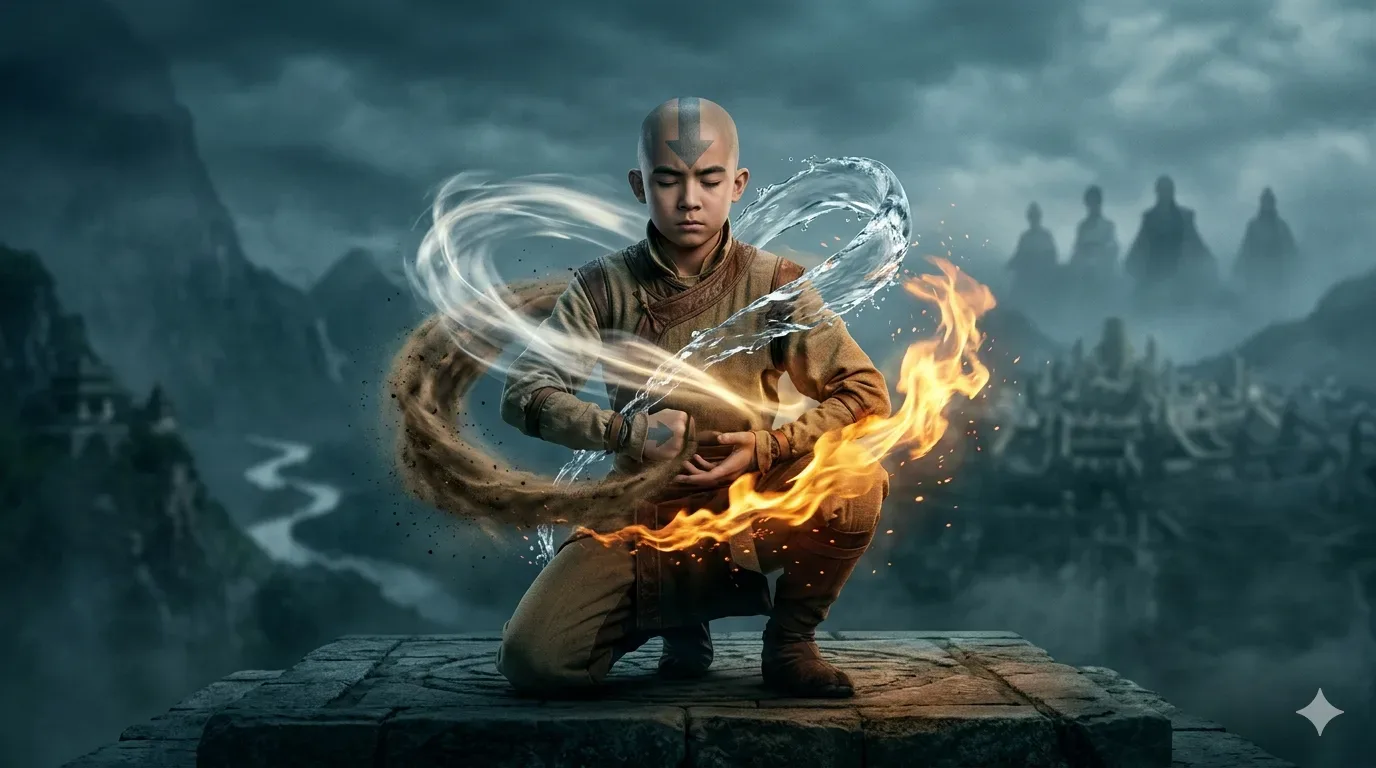
Released in 2024, the first season of the live-action adaptation of Avatar: The Last Airbender introduced audiences to the story of Aang, the last survivor of the Air Nomads and the Avatar destined to restore balance between the four nations.
The production gained a large worldwide audience on Netflix, remaining among the most watched titles on the platform in several countries in the weeks following its release. The commercial success quickly guaranteed the series' renewal for its second and third seasons, allowing the story to have a planned structure to adapt the entire main journey of the original cartoon.
This planning was seen positively by many fans, as it avoids the risk of a narrative interrupted before concluding the central events of the saga.
The arrival of the Earth Kingdom and the expansion of the universe
The second season will mainly adapt the events of the book Terra from the original animation, a phase considered by many fans as the moment in which the story reaches an even greater level of political, emotional and philosophical complexity.
The Earth Kingdom represents a much broader scenario, with new cities, cultures and conflicts. Among the most anticipated events is the arrival of Ba Sing Se, one of the largest and most important cities in the Avatar universe.
This expansion will also allow the series to explore deeper themes, such as political propaganda, information manipulation, social inequality, war and cultural identity — elements that made the original animation a work admired by children and adults alike.
Toph: the character most awaited by fans
Among all the expected news, none generates as much expectation as the introduction of Toph Beifong.
In the original animation, Toph became one of the most popular characters in the franchise due to her strong personality, irreverent humor and the unique way in which she masters earthbending using her perception through ground vibrations.
Adapting such a beloved character represents one of the creative team's biggest challenges. Fans expect not only a faithful visual representation, but mainly the maintenance of the essence that transformed Toph into one of the great icons of pop culture.
The choice of the actress and the way in which her visual impairment will be represented are also topics closely watched by the public, reinforcing the importance of a careful and respectful adaptation.
The challenge of pleasing old fans and new viewers
One of the biggest debates surrounding any adaptation is the relationship between fidelity and innovation.
Viewers who followed the animation released in 2005 have a strong emotional connection with the original characters, scenes and dialogues. At the same time, the live-action needs to work for people who have never seen the cartoon.
The most efficient strategy for this type of production is to preserve the fundamental pillars of the work — characters, conflicts, values and themes — while adapting the narrative rhythm, visual construction and language to the current format of big-budget series.
That's exactly the balance the second season needs to strike.
Fans' main expectations
A deeper Earth Kingdom adaptation
Fans hope that the series will have more time to develop places and characters that were fundamental in the animation, such as Ba Sing Se, the Kyoshi Warriors and other important groups in history.
Character development
The relationship between Aang, Katara, Sokka and their new allies should gain more maturity. The second phase of the original journey presents greater emotional challenges and decisions that change the fate of the world.
The evolution of visual effects and warp scenes
Although the first season was praised for its visual scale, some viewers also pointed out points that could evolve, especially in the rhythm of the action scenes and the development of some emotional moments.
The expectation is that, with the team's greater experience in the live-action universe, the new season will feature even more creative and impactful warp scenes.
The weight of the legacy of one of the greatest animations in history
Avatar: The Last Airbender is often remembered as one of the most important animated films of the 21st century. Its combination of fantasy, Eastern philosophy, character development, and social themes helped the series reach beyond children's audiences.
Therefore, any new adaptation naturally faces a high level of comparison.
The biggest sign of the second season's success will not only be reproducing famous moments from the animation, but demonstrating that Aang's story remains relevant to a new generation of viewers.
The future of the Avatar franchise on Netflix
With the confirmation of three seasons to adapt the main saga, Netflix demonstrates confidence in the long-term potential of the property.
If the second season manages to expand the narrative quality and deepen its characters, the franchise will be able to consolidate live-action as a complementary interpretation to animation, and not just as a simple recreation.
Aang's journey has always been about balance — between the elements, the people, and the people. Interestingly, the series' biggest challenge is also finding a balance between nostalgia and renewal.
Conclusion
The second season of Avatar: The Last Airbender arrives with a complex mission: to honor a work considered classic at the same time as it needs to justify its existence to a new audience.
The arrival of iconic characters, the exploration of the Earth Kingdom and the maturation of the protagonists make this phase one of the most anticipated by fans. More than repeating the animation, the success of the season will depend on its ability to capture the heart of the original story while using live-action resources to offer a new perspective on this universe.